IT'S CHOCOLATE MONTH


Thursday, April 28, 2016

Twinkies last FOR. EVER.


Betcha didn't notice the Twinkie in Wall-e, did ya! Yup. Well, it's a long-held myth that Twinkies last for ever. It interests the best of us, including a chemistry teacher in 1976. Mr. Roger Bennatti "placed it on top of his chalkboard for an experiment to observe decay (or lack thereof) in preserved foods," and it stayed there for 30 years (http://bangordailynews.com). It is actually still at the school where he worked, at George Stevens Academy.
Wanna see?
No?
Sorry! ^.^
As you can probably see, the Twinkie is intact. Even so, I for one, would NEVER eat it. Sorry, but they're simply not immortal. Even Hostess doesn't believe it! They said that the new Twinkies now have a shelf life of 45 days. It is better than the old one, which survived around 25 days, but not everlasting. That's for sure.

Verdict: False... sorry

Tuesday, April 12, 2016

Drink 8 glasses of water everyday

It sounds healthy, and for some people, it does work, but there's one reason why this is a myth. Everyone is different! For example, the average 4-year old should only drink 4-5 glasses of water, so 8 is of course too much. Drinking too much water can overwhelm your body, making you lightheaded and/or dizzy. According to listverse.com, the amount of water you drink depends on other factors besides age too, "including your body size, the local climate, and how much physical activity you undertake. The Institute of Medicine suggests that the average adult man should drink about 13 cups of liquid (not necessarily water) every day, while the average adult woman should drink about nine cups per day". See? 8 glasses (or cups) of water isn't an amount that universally works! Ask your doctor to check what amount best fits you personally. Otherwise, enjoy water!

Verdict: FALSE-ish

Thursday, April 7, 2016

Exercise = Better Bones?


It's something even some doctors dare to say: "Exercise to strengthen your bones!". It has been in magazines, tv shows, even to advertise exercise equipment. Is it true? Well, by now you can guess the answer: it is false. Where did it come from? Well, it might have something to do with the fact that when one is bedridden, they tend to lose bone density. People then began to believe that, by default, this must mean that being up and active, not only prevents bone loss, but strengthens bones too. Over a decade ago, it was tested whether exercise actually did anything. Their studies "failed to find anything more than a minuscule exercise effect — on the order of 1 percent or less, which is too small to be clinically significant... There was no evidence that bone was gained when people walked or ran" (www.nytimes.com). One might argue that these and other tests show some effect, and that this is enough to prove exercise helps. But, in reality, "there is no evidence that they make bone stronger or protect it from osteoporosis" (www.nytimes.com). Now, that doesn't mean exercise is useless and you can just avoid it. After all, it does strengthen your muscles!

Verdict: FALSE

Thursday, March 31, 2016

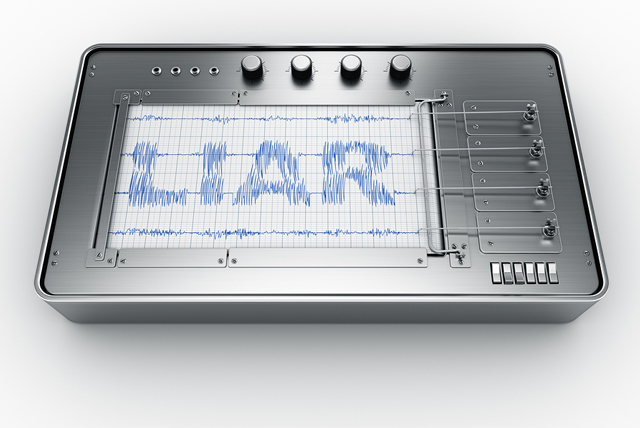
Lie detectors are real?!


After years and years of the polygraph machine being featured in great and famed TV shows, it is actually a pretty common belief that these so-called 'lie detectors' are reliable enough to tell, for sure, whether or not a person is lying. But first, what is a polygraph? What does it do? Well, it is a machine that can distinguish a person's blood pressure, pulse, respiration, and skin conductivity (depending on the model, it may detect other things as well). These responses are thought to be directly related to a person's state of mind, hence they're called physiological responses. But, well, there are at least two problems with this.
  1. "There is no evidence that any pattern of physiological reactions is unique to deception."  
  2. "An honest person may be nervous when answering truthfully and a dishonest person may be non-anxious."
What this means is that polygraph tests, aren't necessarily accurate. In fact, even "courts, including the United States Supreme Court... *, have repeatedly rejected the use of polygraph evidence because of its inherent unreliability" (www.apa.org). So in reality, polygraph tests aren't conclusive, and don't test for lies, but physical responses which may or may not even be definitively connected with lying.


Verdict: Not Yet

* "cf. U.S. v. Scheffer, 1998 in which Dr.'s Saxe's research on polygraph fallibility was cited"

Thursday, March 24, 2016

Does gum take 7 years to digest?

Almost every mother, at one point or another, -ooh that rhymes!- has told their child to not swallow their gum. 
"But why?," you'd ask.
"Because if you do, it'll be in your stomach for seven years".

Even so, whether it be on accident or on purpose, you'd inevitably swallow it. And then what? You'd have to think; "Is it true?" Well;
Nope. Nein. No. Niet. Negative.
While it's true that the stomach can't digest the gum resin, it can still separate it from what it can digest, like the sweeteners. What's left would just go through your digestive tract and exit in just a few days like any other hard-to-digest food like popcorn kernels. So, if you or someone you knows freaks out about swallowing gum, set them at ease! It is after all, just a myth. By the way, same goes for red meats. Just FYI. 
 
Verdict: FALSE 


Thursday, March 17, 2016

GIFs!!!!!!!!!!


GIFs!!!!! Images in Graphics Interchange Format, are the best images on the internet. Thank you Steve Wilhite! He created the GIF in 1987 for CompuServe. They add animation to web pages, and can thus be used for an educational, informative, or even a comedic end (my personal favorite). Since then, GIFs have become super popular, especially for comedic effect on sites like that of BuzzFeed, Tumblr, Pinterest, etc.
For example, see the following from BuzzFeed:

"Are These The 43 Funniest GIFs Of All Time?"

See even funnier BuzzFeed GIFs here!

Whatever the purpose for making a GIF, there is a lingering misconception, which I will settle right now: 
How do you pronounce GIF?

It is pronounced with a SOFT G. Like "jif".
Proof? 
"The GIF (Graphic Interchange Format), pronounced 'JIF'..."   -CompuServe

"The Oxford English Dictionary accepts both pronunciations. They are wrong. It is a soft 'G,' pronounced 'jif'. End of story."   -Steve Wilhite

Verdict: SOFT G

Friday, March 11, 2016

Sharks ≠ Disease?


Was the BBC wrong? Well, it seems it is the case. It has been a long-held myth that sharks don't get illnesses like cancer or tumors. But, this is just plain weird. The fact that sharks aren't "immune," at least to cancer, has been known, for over 150 years (according to the Discovery Channel). So, where did people get this misconception from? It looks like it was just another lie scammers told to promote their 'miraculous' shark cartilage treatments. Still don't believe it?

Ta-da!
Obviously, sharks aren't immune to tumors. They get cancer too. David Shiffman, a shark researcher and doctoral student at the University of Miami, flat-out said, "Sharks don't get cancer". There you have it, a professional sir has confirmed it! So, there. Sharks do get tumors and cancer.

Verdict: FALSE